
Glazing
Dec 05, 2025
When it comes to preserving and displaying artworks, choosing the right glazing is just as important as selecting the perfect frame. Glazing not only protects the piece from dust and physical damage but can also enhance its appearance and longevity. With various materials available—each offering unique benefits and drawbacks—it’s essential to understand which option best suits your framing needs. This article will answer your questions and guide you towards the best glazing option for your needs.
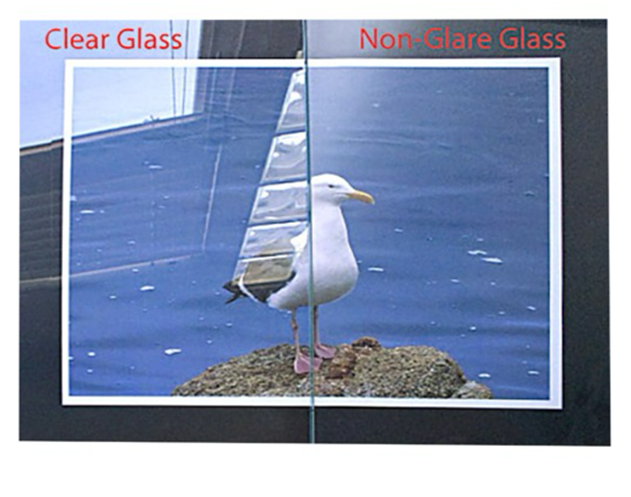
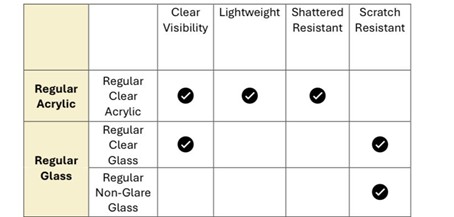
Let’s begin with regular glass. Regular glass is divided into two types: regular clear glass and regular non-glare glass. Both types have their pros and cons.
Regular clear glass is scratch-resistant and offers a clear view of the artwork, allowing colours to appear vibrant and enhancing the overall presentation without distortion. However, it also reflects light, which can create glare and hinder the visibility of the artwork underneath.
On the other hand, Regular non-glare glass has a matte-like finish that diffuses light, reducing reflections and creating a softer, more comfortable viewing experience. While this finish helps minimise glare, it’s not completely glare-free. Additionally, it can produce a slight softening effect that may mute the colours of the artwork.
Next up, we’ll be talking about regular clear acrylic:
Regular clear acrylic offers similar clarity to regular clear glass, allowing for a clear and unobstructed view of the artwork. At the same time, clear acrylic is much lighter than glass, reducing the overall weight of the frame and making it safer to handle—especially for large or oversized pieces. Additionally, clear acrylic is shatter-resistant, which makes the artwork safer during handling and transportation.
Lastly, we have three types of protective glazing to introduce:
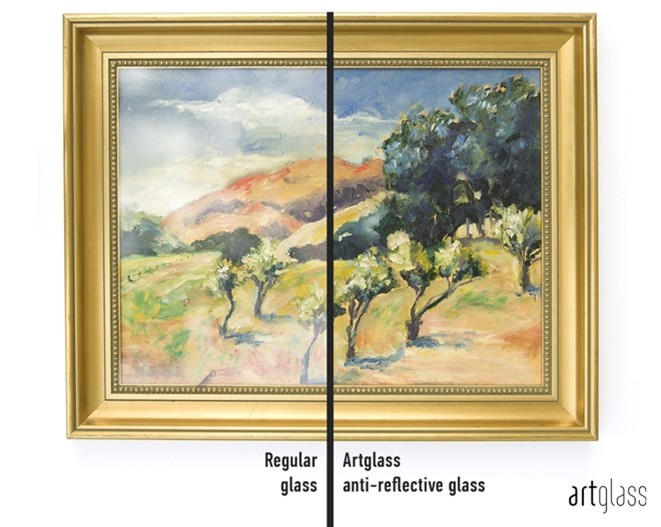
Artglass AR99 – this is a high-performance glass designed to protect your artwork. It provides a crisp and clear view, ensuring that colours and textures are accurately represented. Artglass AR99 is anti-reflective and features a special coating that minimises reflections, making it virtually “invisible” and preserving the true colours and details of the piece. Most importantly, it offers UV protection by blocking 99% of harmful UV rays, which helps prevent fading, discolouration, and long-term damage to the artwork.
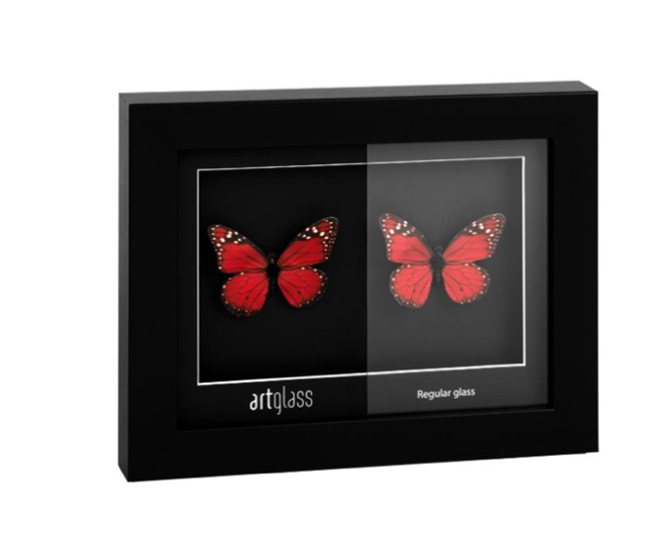
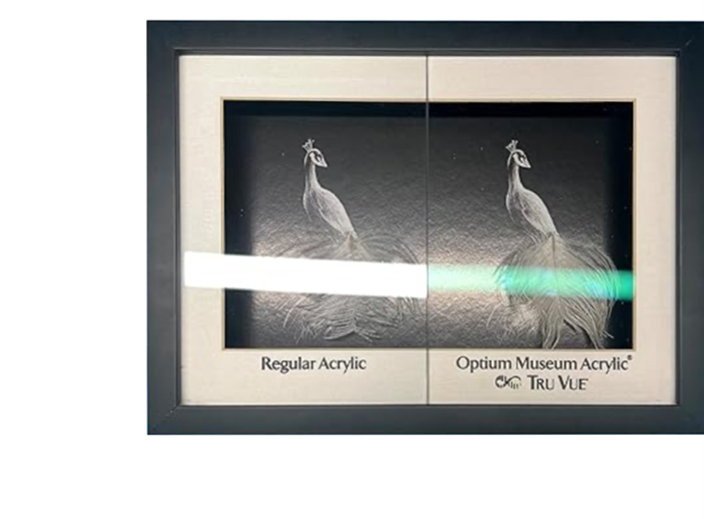
UV Plexi 99% Acrylic – this acrylic glazing also blocks 99% of harmful UV rays, helping to preserve the original vibrancy of artwork over time. It is shatter-resistant, offering strong impact resistance that makes it a safer choice for homes, schools, or public displays. Additionally, it is very lightweight, making it easier and safer to handle, transport, and hang—especially for large frames.
Tru Vue 99% Optium Museum Acrylic – this is a premium option designed to meet the highest conservation standards. It is anti-static, preventing the static electricity to attract dust and damage delicate artwork interfering the viewing experience. The acrylic is also optically coated to reduce reflections significantly, creating a nearly invisible surface that offers clarity. With 99% UV protection, it shields artwork from harmful rays without altering colour tones. Unlike some UV-filtering products that impart a yellow hue, Tru Vue preserves true colour fidelity.
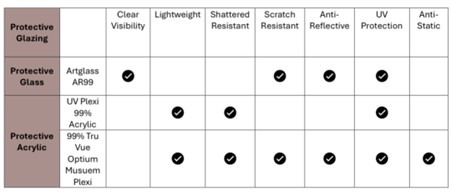
To sum up, choosing the right glazing is a key step in both preserving and presenting your artworks. From regular glass / acrylic to protective glazing, each material offers its own set of advantages—from clarity and glare reduction to safety and UV protection. Regular options provide affordability and basic protection, while premium choices like Artglass AR99 and 99% Tru Vue Optium Museum Plexi offer high-level preservation features without compromising on visual quality. By understanding the characteristics of each glazing type, you can easily choose the one that best suits your needs.